
Manufacturing
How to Build a Tech Pack a Knitwear Factory Can Quote Without Guesswork
Build a knitwear tech pack that supports accurate costing, sampling and bulk production with this practical, factory-ready checklist.
SBROS Production Team · July 6, 2026
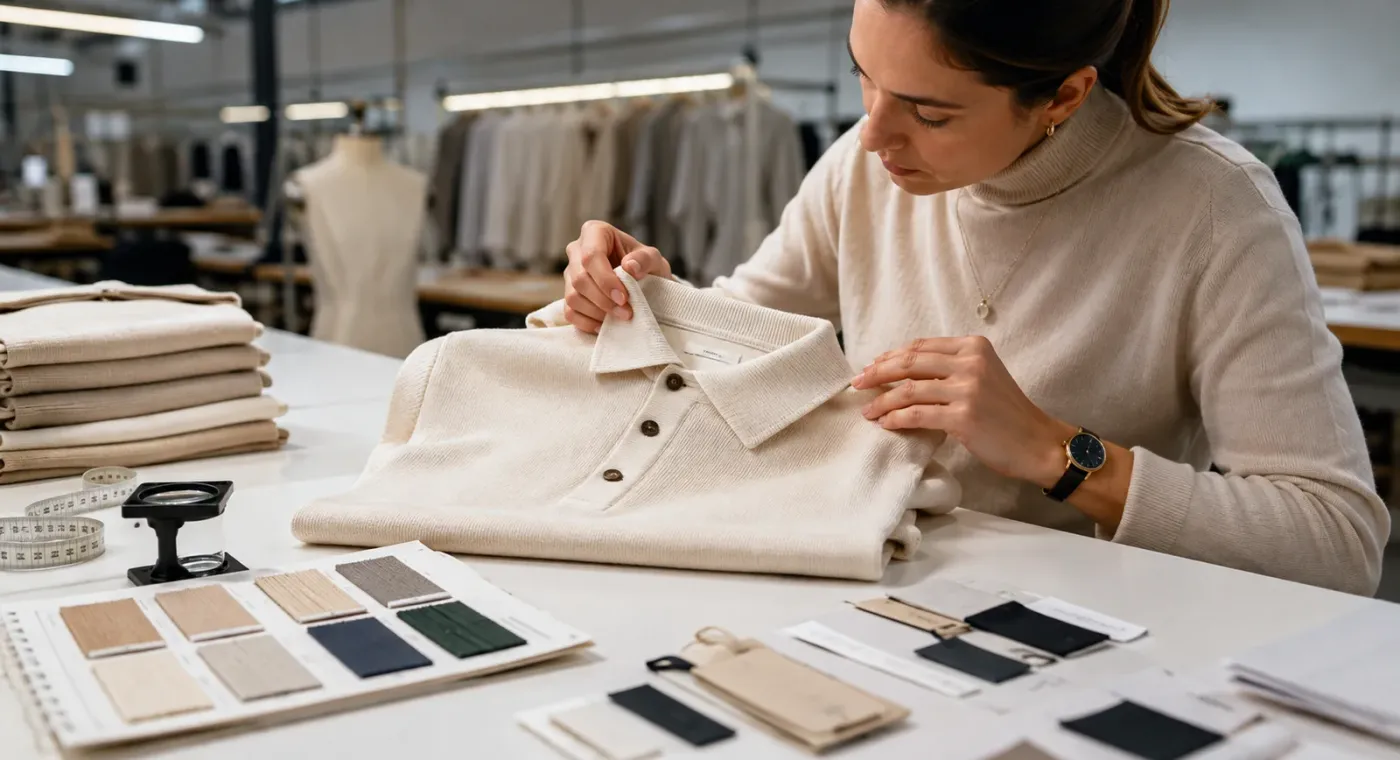
A factory cannot quote a garment it has to imagine.
A reference image can communicate a mood, silhouette, or ambition. It cannot reliably communicate the yarn, construction, fit, measurement tolerances, trims, or finish that will make the product commercially viable. When that information is split across chats, screenshots, and verbal notes, the first sample becomes an interpretation exercise. That costs time for the brand and creates avoidable uncertainty for the factory.
A tech pack turns product intent into a shared production record. It does not need to be visually elaborate. It needs to be clear enough that a development team can cost the product, identify open questions, and reproduce an approved version later. For knitwear, that clarity matters early because material behavior, construction, and finishing affect hand feel, fit, and cost at the same time.
Start with the commercial frame
State the style name, target quantity by color and size, destination market, and desired delivery window. These details do not lock the order. They let a factory assess whether the program is commercially and operationally realistic.
A quote for 300 garments in one color is not equivalent to a quote for the same total split across several colors and sizes. The yarn, dyeing, trims, and production planning can change materially. Giving the factory the intended order structure helps it price the product you are actually considering, not a simplified version of it.
Describe the garment, not only the inspiration
Include front and back technical flats alongside any visual reference. Mark seam placement, neckline or collar shape, pocket locations, cuff construction, artwork placement, and any detail that changes labor or material use. A good flat gives production a map; a reference garment adds context, but it should not replace written instructions.
The measurement page deserves particular care. List points of measure, the base size, grading rules if they are available, and tolerances for critical points. “Relaxed fit” is useful direction, but it is not a production measurement. If fit remains exploratory, label that clearly instead of presenting an assumption as a final decision.
Build a complete bill of materials
Your bill of materials should identify every component: yarn or fabric composition, weight or gauge where relevant, color reference, rib, thread, labels, hangtags, packaging, and special trims. If a material is not yet fixed, describe the performance goal: soft but stable after wash, a compact surface, a substantial hand, or a lightweight layer. This gives the factory room to propose viable options while making the cost and timing implications visible.
Keep one approval trail
Give the document a version number and date. Record who approves fit, color, artwork, labels, and packaging. After each sample round, update the same source of truth rather than circulating disconnected feedback. That is not bureaucracy. It is how the garment approved in development remains the garment understood before bulk production.
Before requesting a quote, ask four questions:
- Can the materials be priced without guessing?
- Is every construction detail identified?
- Can the approved fit be measured?
- Is it clear which decisions are still open?
If the answer is yes, the pack is ready for a productive factory conversation.
Read our full-package manufacturing guide to understand the broader process, then review the sample-to-bulk approval map. When your materials and specifications are ready, share your program requirements with our team.