
Materials
Fabric Testing Before Bulk Production: Shrinkage, Pilling, Colorfastness and What They Mean
Learn how shrinkage, pilling, and colorfastness tests inform apparel decisions, and how to agree on methods and acceptance criteria before bulk.
SBROS Quality Team · October 1, 2026
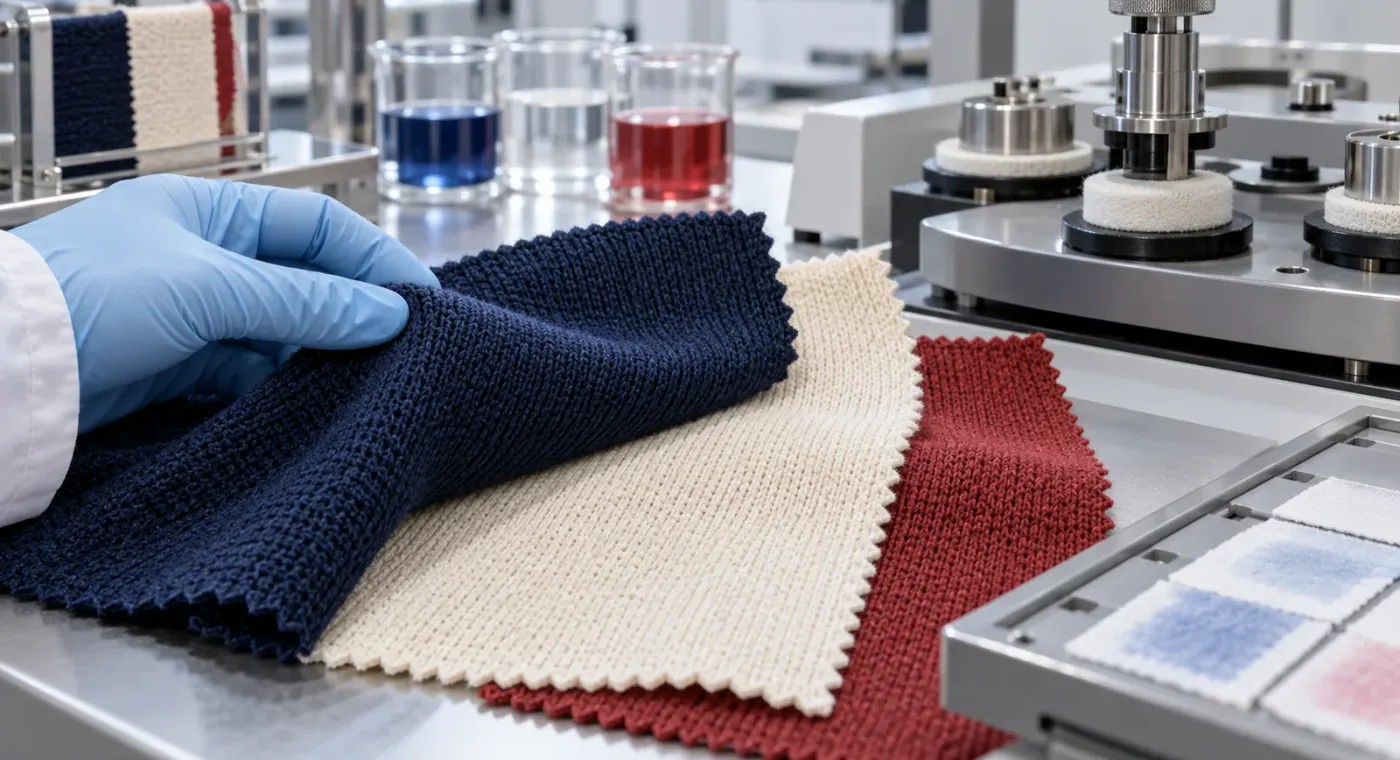
A fabric swatch can look perfect on a desk and behave differently after washing, rubbing, or wearing. Testing helps a brand find out what matters before that material becomes a production commitment.
The purpose is not to collect test names or certificates. It is to connect a likely product risk to a method, a result, and a decision. A lightweight tee, a ribbed collar, and a structured knit layer do not experience the same stresses. The right test plan starts with what the garment is expected to do.
Begin with the product’s intended use
Before requesting a test, document the fiber composition, knit construction, color, finish, care route, and intended customer use. Decide which performance characteristics matter most: stable dimensions, resistance to surface fuzzing, color that does not transfer, or an appearance that remains acceptable after laundering.
Also define the test method, conditioning and preparation, number of specimens, rating scale, and acceptance criterion with the supplier or laboratory. Results from different methods may not be directly comparable. A result without its method and conditions is difficult to interpret.
Shrinkage and dimensional change
Washing and drying can change garment dimensions. That may affect length, width, sleeve balance, or the way a rib opening recovers. Fabric-level and garment-level testing answer related but different questions. A garment sample tested through the intended care route can help the product team understand the effect on fit and measurements.
The result should feed back into decisions: adjust the pattern, modify finishing, revise the care instructions if supported by evidence, or investigate another material. Do not use an assumed universal shrinkage allowance. The target belongs to the product specification and should reflect the garment’s intended use.
Pilling and surface appearance
Pilling describes small fiber aggregates that can form on a textile surface through friction. The customer may notice them at sleeves, underarms, side seams, or wherever a bag or another garment rubs. A test can compare material options under defined conditions, but the result is not a guarantee of identical performance in every real-world use.
Review the test method, rating scale, fabric construction, and finishing together. If appearance after wear is central to the product promise, evaluate a sample under realistic use and document what level of change is acceptable.
Colorfastness and transfer
Color may change or transfer through laundering, rubbing, perspiration, light, or other exposures. There is no single “colorfastness test” that covers every use. Select the relevant method based on the garment and market requirements. A dark knit worn next to a light layer may call for a different risk conversation than a garment that is not expected to experience that contact.
Turn results into an approval decision
Use a simple test matrix with five fields: product risk, material or garment tested, method and conditions, target, and decision owner. When a result misses the agreed target, decide whether to change yarn, construction, dyeing or finish, adjust the product, or reassess the requirement. Record that decision in the current technical pack revision.
Testing complements sample review and in-line quality checks; it does not replace them. A useful next step is to apply the findings during sample evaluation and close open items in the pre-production meeting. For material development support, contact our team.
Reference: AATCC test methods and procedures include methods for dimensional change after laundering, colorfastness, and appearance. Select and confirm the applicable current method with the testing laboratory; the standards themselves may be subject to licensing and revision.