
Sourcing
Garment Packaging and Labeling for Export: A Practical Brand Checklist
Plan garment labels and packaging for export with a checklist for product information, destination requirements, artwork approval, and packing details.
SBROS Production Team · October 1, 2026
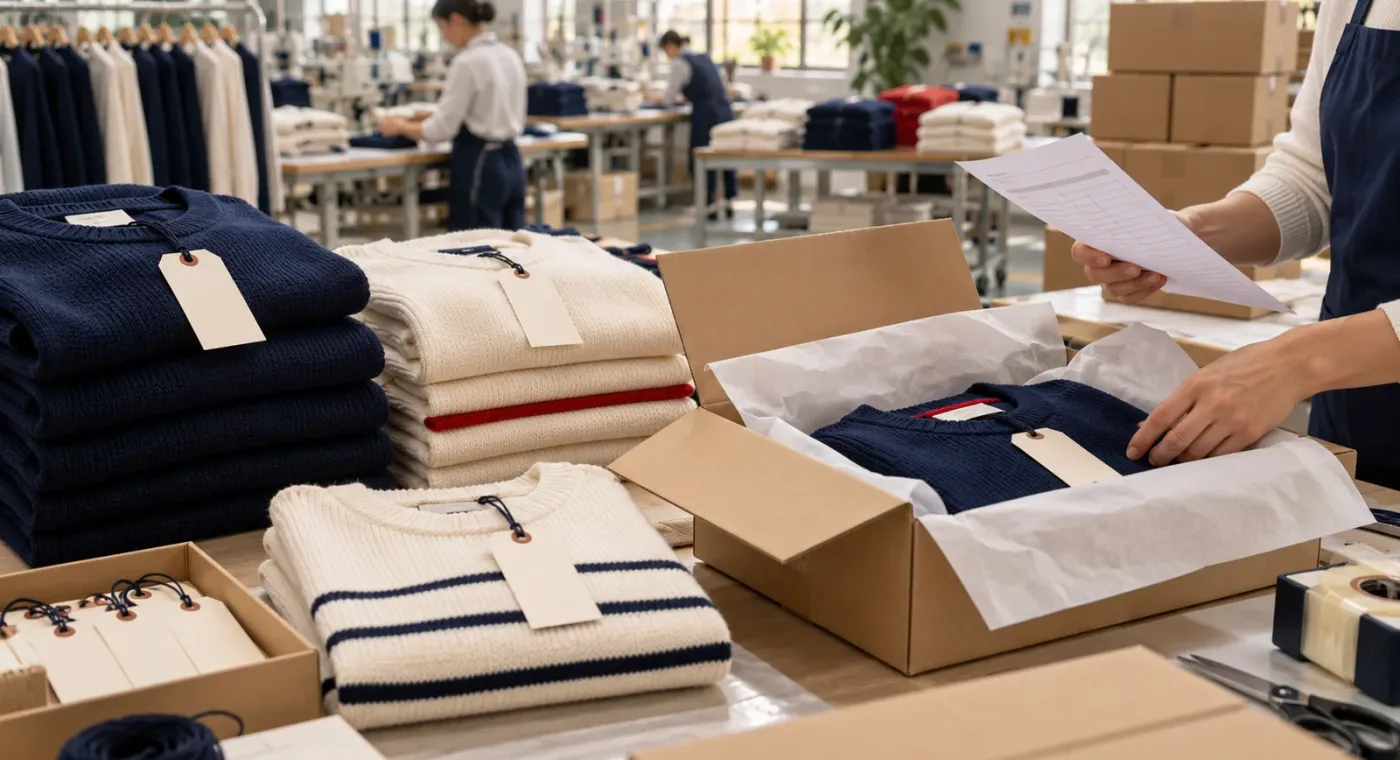
Labels and packaging are product decisions, not finishing touches. They carry brand identity, product information, origin details, and instructions that help protect a garment through delivery. Leaving them until the final days of production can create avoidable rework or a shipment that needs correction.
Requirements vary by destination, product type, fiber, customer, and sales channel. This checklist helps a brand organize the work; it is not legal advice and does not replace review by the importer of record, customs broker, or qualified regulatory counsel.
Separate the information and the physical components
Start by distinguishing the brand label, fiber-content information, care instructions, country-of-origin marking, size and style identification, hangtag, and protective or retail packaging. Some information may share a label, but each item has its own purpose and approval path. Do not assume a hangtag can replace a required label or that a brand label covers origin and care information.
For products entering the United States, the Federal Trade Commission explains that most textile products require fiber content, country of origin, and the identity of the responsible manufacturer, importer, or marketer. Clothing also has care-labeling requirements. Product-specific exceptions and additional rules may apply, so confirm the current obligations for the exact garment and sales route.
Build label content from verified product data
Confirm fiber composition against the actual bill of materials and supporting records. Verify the country-of-origin statement with the responsible importer and customs adviser. Approve care instructions using reliable product information and the intended care route, not a guess based on a similar garment. Keep the English disclosures required for the U.S. market and add other languages only when appropriate.
For children’s products or specialized categories, additional requirements may apply. The CPSC provides separate guidance on clothing flammability and tracking labels for children’s products. Identify early whether the style falls into one of these categories and who will verify the applicable rules.
Approve artwork and placement before production
The factory needs final artwork, dimensions, placement, label material, attachment method, and packing instructions early enough to source and approve them. The brand should maintain a dated, version-controlled record of the approved content. Confirm that label placement is comfortable, legible, durable for the intended garment, and consistent with the destination-market requirements.
Make packaging part of the product specification
Define how garments are folded, protected, counted, and grouped. Include SKU or barcode data where required, carton quantities, carton marks, polybag or alternative packaging requirements, and any retailer-specific instructions. Packaging should protect the product and support receiving operations without adding unnecessary components. Where a customer or destination has packaging rules, verify them before materials are ordered.
Use a pre-shipment checklist
Before bulk packing, compare the approved label artwork and packaging specification with a production sample. Confirm correct style, color, size, content, origin, care, barcode, carton count, and destination documentation. Assign one person to close each open question and retain the final approved record.
Connect this work to the pre-production meeting checklist and our article on responsible apparel sourcing evidence. For U.S. reference material, see the FTC apparel labeling overview, its care-labeling rule, and CPSC clothing guidance. Confirm current requirements with your importer and advisers before approving production.